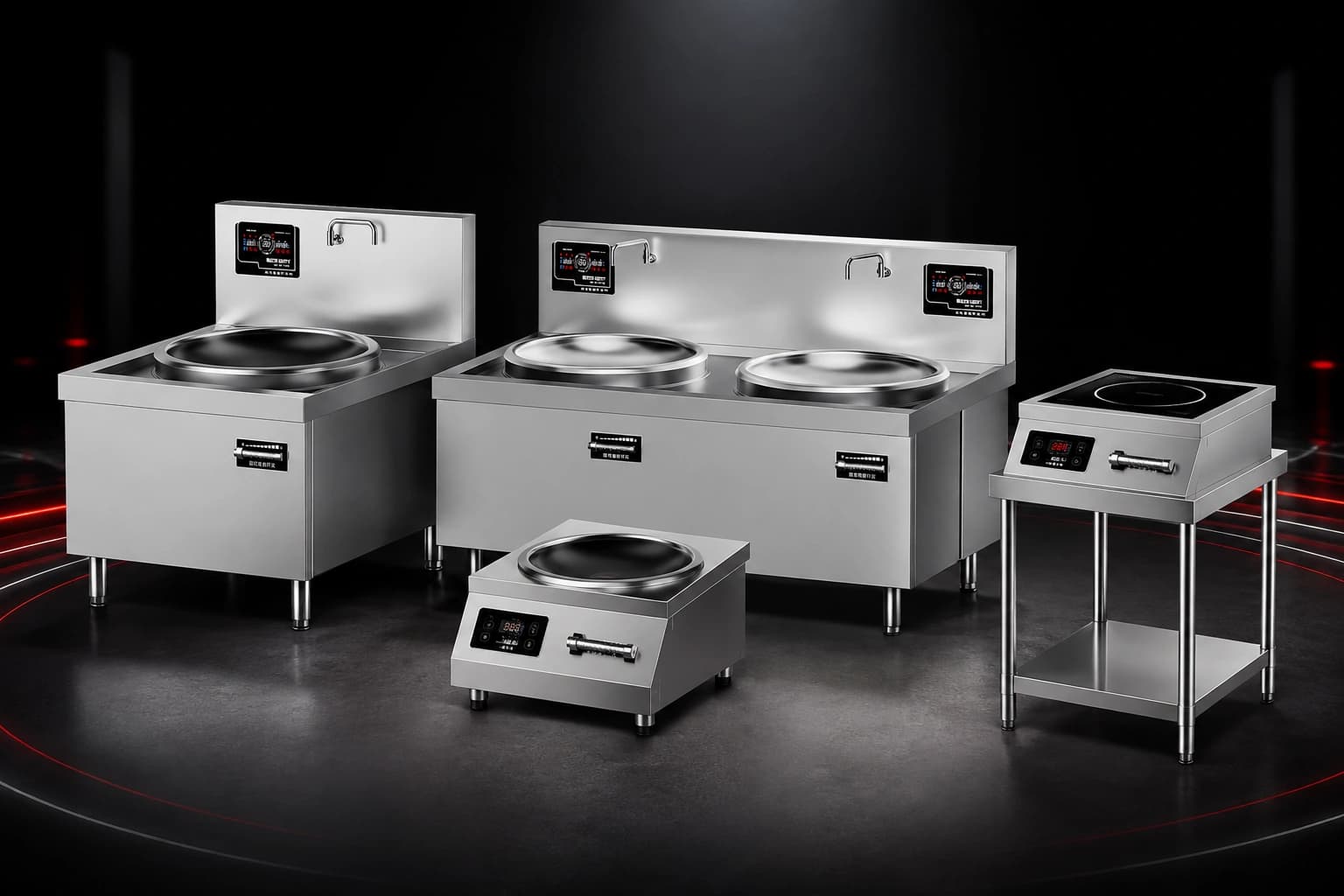
The fastest way to narrow a commercial cooking equipment shortlist is to begin with the kitchen workflow—not a model number. A useful inquiry explains what the equipment must do, how it will be installed and what site conditions the final configuration must match.
Quick answer
- Define the cooking task and cookware before comparing products.
- Keep induction and infrared / ceramic technologies separate.
- Treat built-in, multi-zone, flat and concave as configuration choices.
- Confirm electrical and installation details before final quotation.
Start with the cooking task
Describe the work before the equipment.
Begin with the menu, cooking method and service workflow. The same kitchen may need a dedicated wok station, a flexible countertop unit, a table-level hot pot cooker or a noodle-boiling station. These are different buying tasks, even when they sit within the same commercial kitchen project.
A supplier can make a more relevant first recommendation when the inquiry includes the food being prepared, the cookware already in use and the number of simultaneous cooking positions required.
Separate the technology
Do not mix induction and infrared specifications.
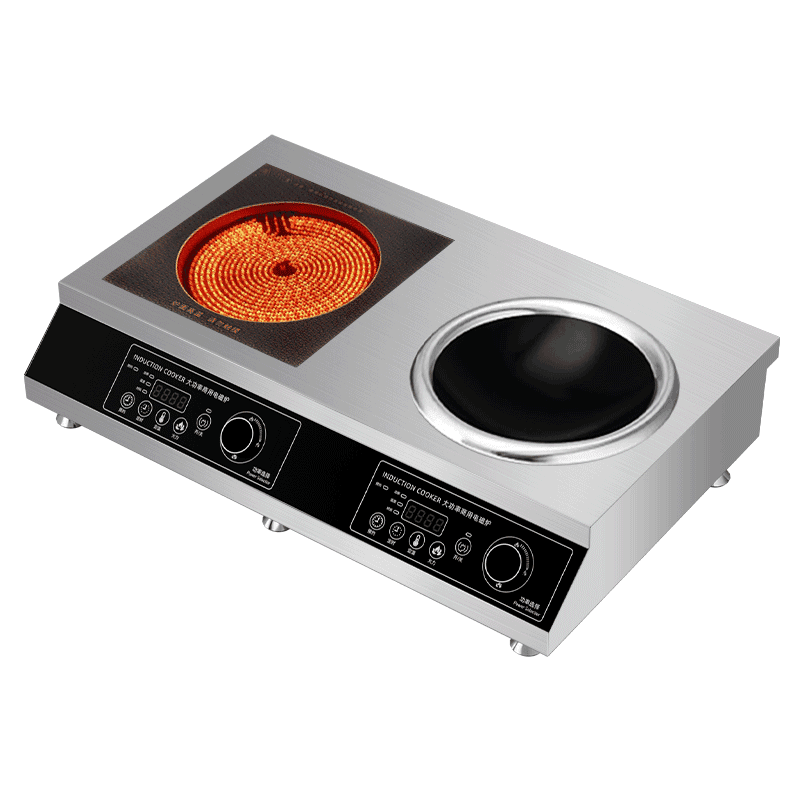
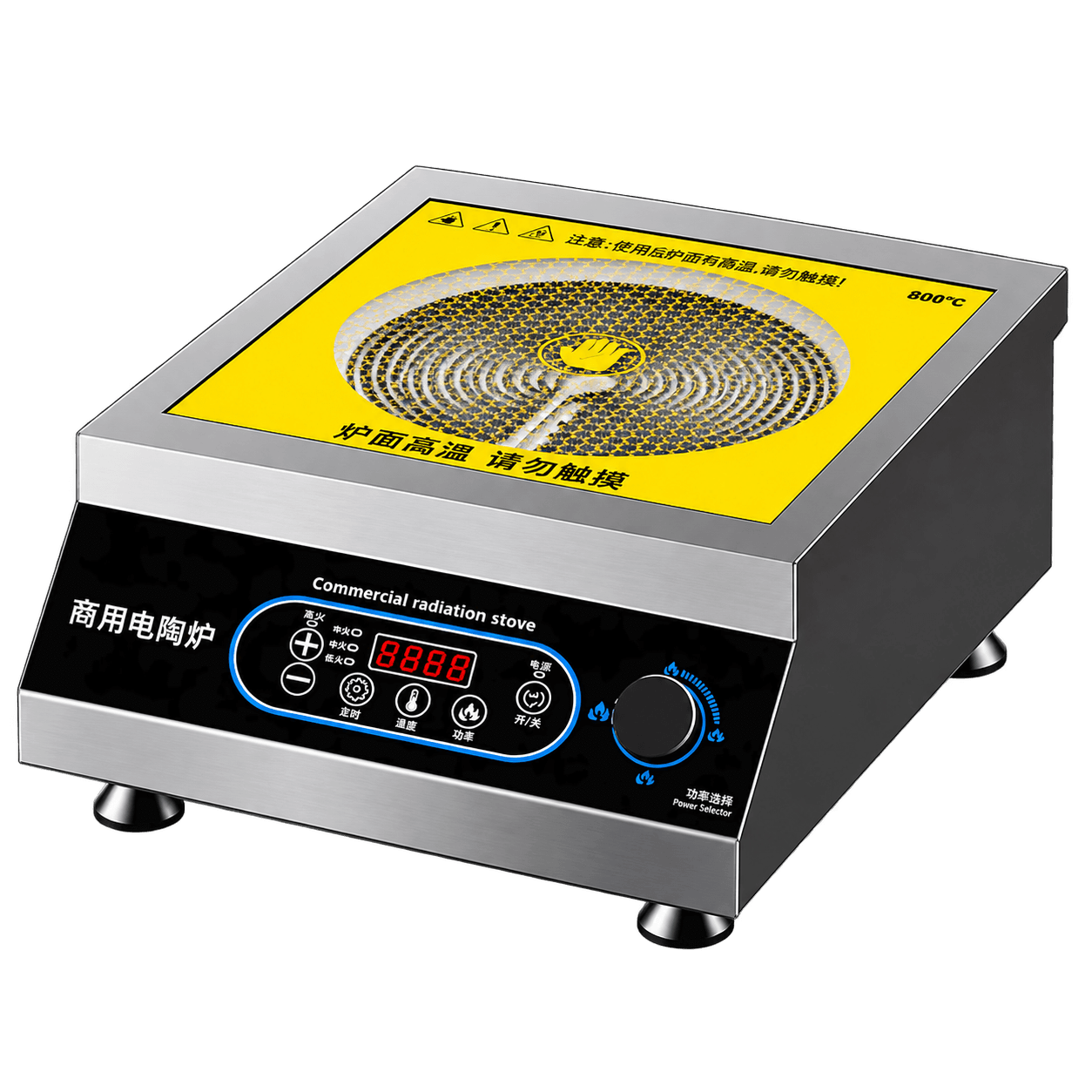
Induction and infrared / ceramic are separate heating technologies. They should not share a single undifferentiated specification sheet or product label. First confirm which technology the project requires, then request the matching cookware, electrical and installation guidance for that configuration.
Commercial induction
Confirm cookware compatibility first.
Share the cookware material, base shape and intended cooking task before selecting the format.Infrared / ceramic
Request technology-specific confirmation.
Keep the product name and technical data separate from induction equipment throughout the inquiry.A product image alone is not enough to identify the heating technology. Ask for the technology to be stated clearly in the model information and quotation.
Match surface and cookware
Flat and concave describe the cooking surface.
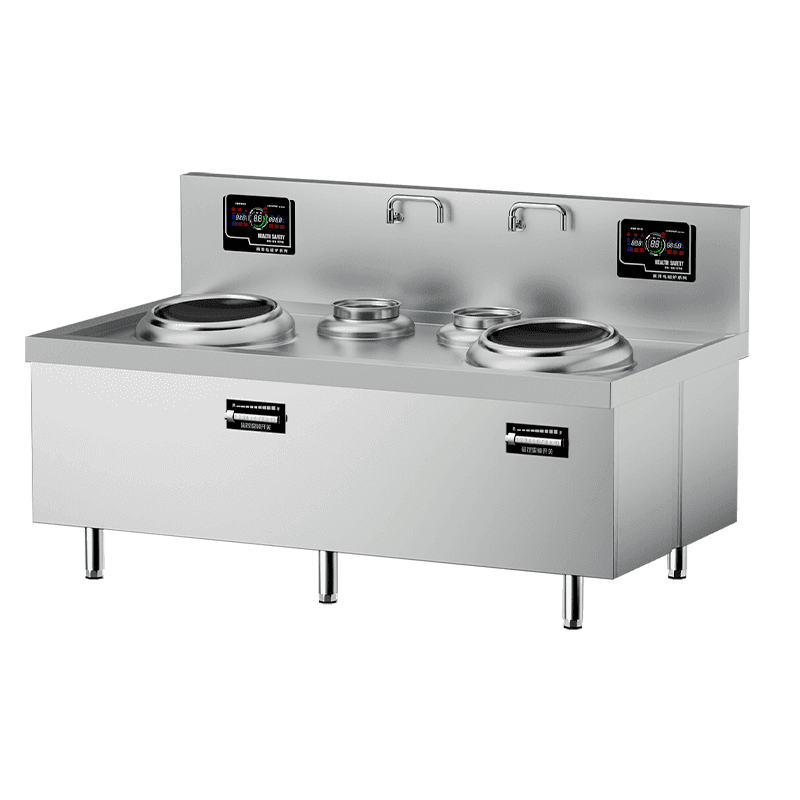
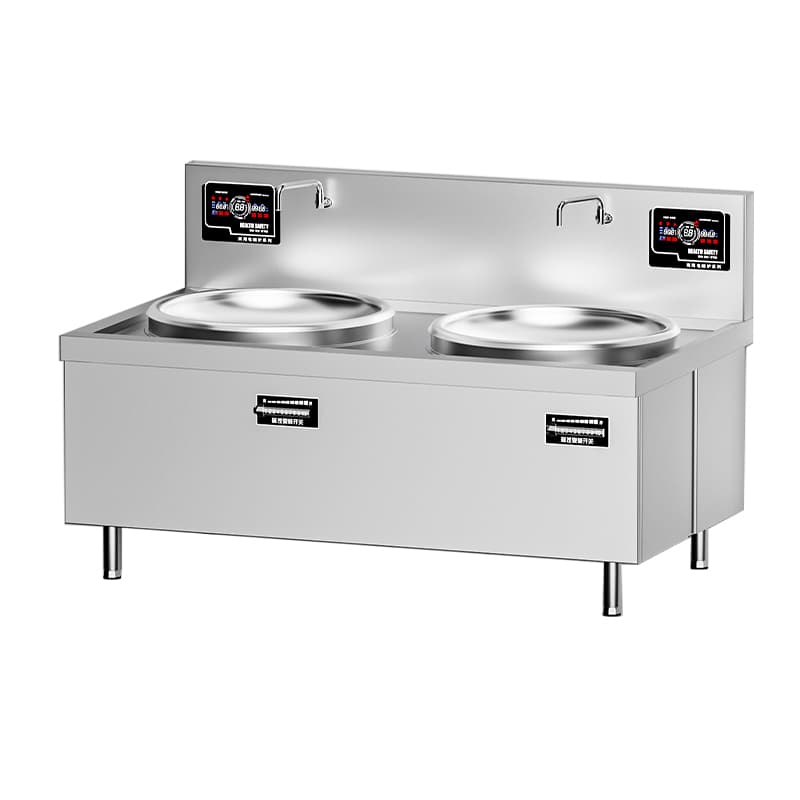
Flat and concave are product attributes, not standalone product families. A flat surface should be discussed together with flat-base cookware. A concave surface should be discussed together with the wok shape, size and cooking task. The correct choice depends on how the station will actually be used.
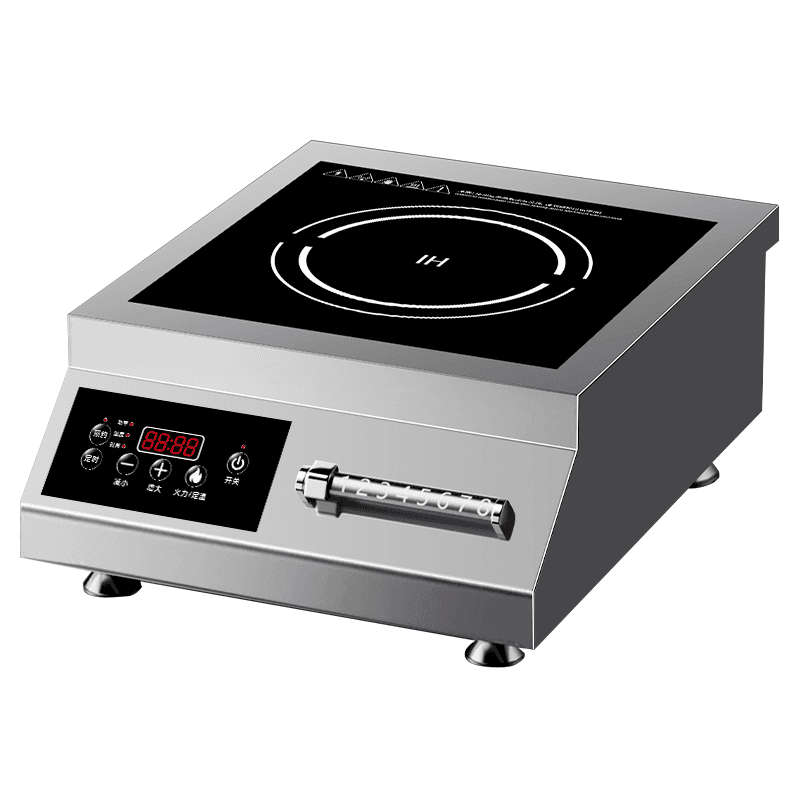 Flat cooking surface
 Concave wok positions
Plan format and layout
Turn the kitchen plan into equipment requirements.
Installation format and cooking-position count affect how a product fits into the workflow. Treat these as selection fields inside the relevant product family rather than creating a new product category for every possible combination.
Countertop
Confirm the available work surface and the required cooking position.
Floor-standing
Confirm the station layout and the equipment footprint required.
Built-in
Treat this as an installation option and confirm availability.
Cooking positions
State whether the workflow needs a single, double or multi-position layout.
Confirm site conditions
Electrical questions belong before the final quote.
Share the destination and available electrical supply early. Voltage, phase and frequency must be confirmed for the selected configuration; they should not be copied from an unrelated model or assumed from a product photograph.
Prepare these site details
- Destination country or region
- Available voltage and phase
- Frequency and connection conditions
- Countertop, floor-standing or built-in installation
Build a useful RFQ
Give the supplier enough context to respond clearly.
You do not need to know the final model before contacting LINGSHI. A requirement-led RFQ gives the product team a better starting point and makes it clear which details still need confirmation.
Include these seven items in the first inquiry.
- 01Menu, cooking process and expected workflow
- 02Cookware type, material, size and shape
- 03Countertop, floor-standing or built-in placement
- 04Single, double or multiple cooking positions
- 05Destination country or region
- 06Available voltage, phase and frequency
- 07Quantity and documents required for review
What should remain unconfirmed?
Model name, power, dimensions, voltage, phase, certification, MOQ, lead time and warranty should be published or quoted only after they are verified for the selected configuration.Find the product family
Use one of five confirmed commercial starting points.
After the requirements are clear, continue into the product family that most closely matches the cooking task. Exact model options remain a follow-up step.
Common buyer questions
Four points worth clarifying early.
Is multi-zone a separate product family?
No. Multi-zone or multiple cooking positions describe the number or layout of cooking positions inside a relevant product family.
Is built-in a separate product category?
No. Built-in is an installation method. Availability must be confirmed for the selected product direction.
Can I compare commercial cookers by power alone?
Power should be reviewed only after the cooking task, cookware, product format and available electrical supply are clear.
Can I request a quotation without a model number?
Yes. Share the application, cookware, layout, site conditions, quantity and destination so the configuration can be discussed.