Commercial kitchen · Retrofit planning
Gas to Induction: A Commercial Kitchen Retrofit Checklist
Start with one cooking station, the customer's menu and the building's actual conditions. This guide helps importers, distributors and kitchen contractors prepare a conversion brief before committing to equipment and site work.
Quick answer
The decision in brief
- Define the station's cooking task and obtain a site review for the exact proposed equipment and simultaneous load.
- Check cookware, operator movement and ventilation together. Agree a representative cooking trial before approving a wider conversion.
- Compare measured task costs and itemized project quotations. Nameplate power and a successful demonstration alone do not establish a savings percentage or payback period.
Assess whether a proposed gas-to-induction kitchen conversion is feasible, then define the pilot, project scope and information needed for a quotation.
Importers, distributors and kitchen-project buyers serving India and Southeast Asia.
01
Define the station and the reason for converting
Identify what the customer wants to change: worn equipment, a renovation, the cooking workflow, control preferences or operating costs. Write down the result that would justify the project. Each objective needs its own evidence; a cooking demonstration cannot settle the building's available electrical capacity.
Record the station's dishes, usual batch sizes, peak sequence, staffing and work between batches. For India and Southeast Asian projects, describe the actual cooking method rather than assuming that a country name identifies the load, wok or site supply. A proposed pilot should represent the task the customer intends to repeat during service.
- Choose the station and the tasks in scope.
- Record the current process, intended change and who approves it.
- Separate confirmed requirements from questions still open.
02
Review the site before confirming the equipment variant
Give the proposed model's electrical and installation documents, the existing building demand and the planned simultaneous equipment use to the responsible local electrical professional. Request a review of the available supply, connection arrangement and any work needed for the station.
Record voltage, phase, frequency and available capacity as site information to confirm. A listed voltage or kW rating does not establish a plug, cable or breaker specification. Countertop placement also does not establish compatibility with an ordinary existing socket.
Confirm access for delivery, supporting surfaces or floor space, clearances and service access against the selected configuration. Identify who coordinates any landlord, building or project review and whether it must be resolved before the order or delivery. Keep the connection design with the professionals responsible for the site.
04
Review the working station and cooking ventilation
Place the proposed equipment on the station plan with ingredient storage, water, utensils, preparation and the pass. Check finished working height and operator movement with the cookware in position. Where two cooking positions must run together, include simultaneous operation in the site review and trial scope.
Cooking still produces vapours and fumes after a change to induction. Ask the ventilation designer to review the actual process and layout. Retain the extraction review in the project scope rather than assuming the existing hood can be removed because the new appliance is electric.
Confirm cleaning and maintenance access against the installation documents. The HSE reference below supports the general cooking-ventilation principle; destination requirements and the actual design need local review.
Engineering product references
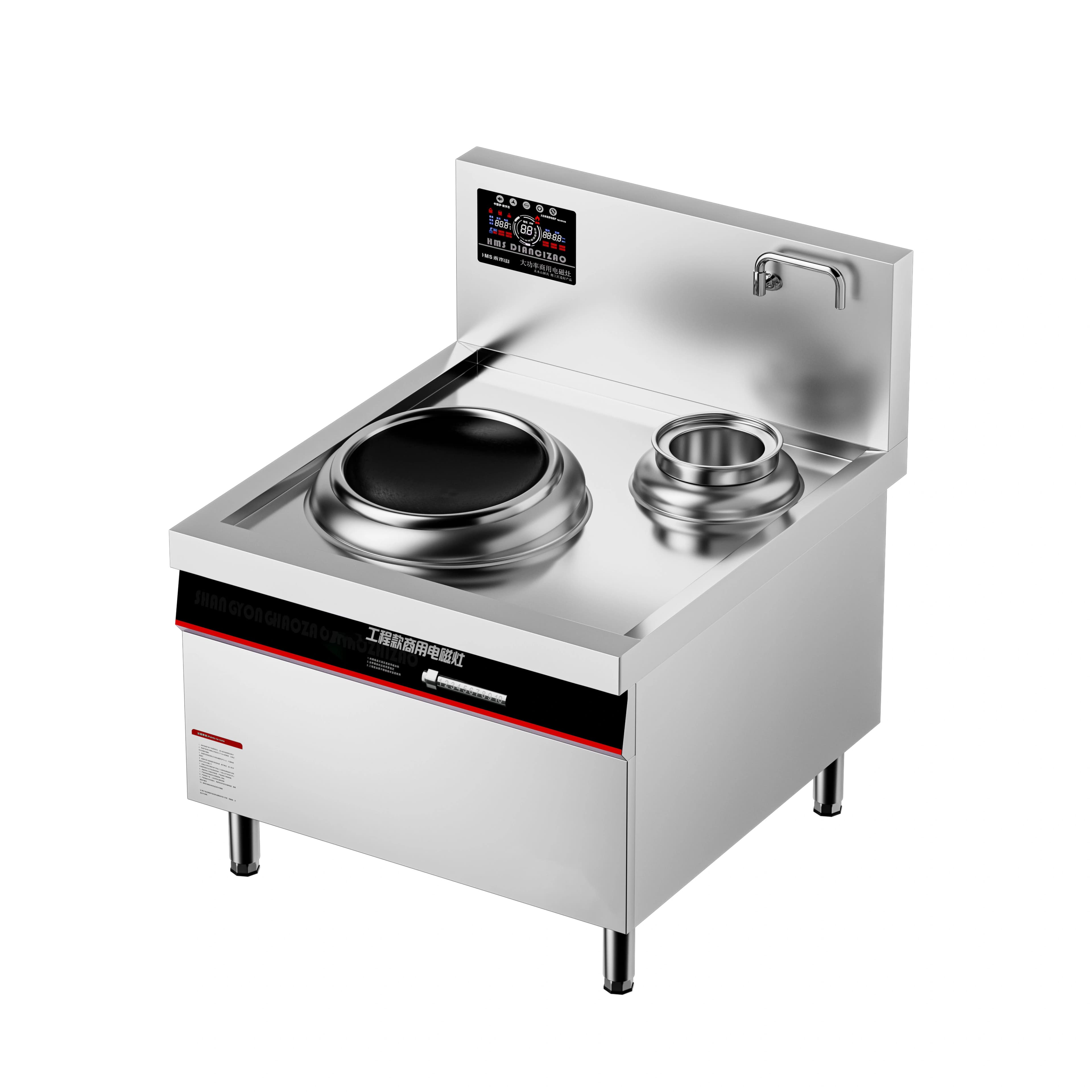
Review the existing induction wok configurations
Identify the equipment family, then confirm the selected variant against the task and site review.View engineering wok ranges05
Separate measured operating costs from the project budget
For a useful energy comparison, define a comparable task and acceptable finished-food output. Record the actual electricity used in kWh and the measured gas quantity in its stated billing unit. A kW rating describes power; it is not the measured energy used during the whole task.
The electricity component for a trial is measured kWh multiplied by the applicable energy price per kWh. The gas component uses the measured fuel quantity and the matching price per unit. Check the customer's tariff and invoice terms for time periods, demand or fixed charges and taxes where applicable; a simple energy calculation does not represent every item on the bill.
Keep equipment, cookware and site work itemized separately. Use actual quotations and an agreed operating schedule to evaluate the project. This guide provides no local tariff, fixed saving or payback estimate. Where readings or quotes are missing, keep the cost conclusion pending.
| Cost item | Evidence to retain |
|---|---|
| Comparable cooking task | Recipe, starting conditions, ingredient quantity, accepted output and repeated cycle |
| Electricity trial | Measured kWh, measurement interval, instrument and applicable electricity charges |
| Existing gas process | Measured fuel use, stated unit, comparable task and matching fuel price |
| Other recurring costs | Relevant confirmed service, maintenance or supply charges and their stated scope |
| One-time project work | Equipment, cookware, approved site work, installation, commissioning and training quotes |
| Operating assumptions | Actual task frequency, service schedule, price dates and items still unconfirmed |
06
Use a documented pilot to decide what can proceed
Agree the acceptance criteria and reviewers before the pilot. Keep the evidence below with a decision, a responsible person and any required follow-up. A blank item remains pending; a satisfactory cooking result does not complete every other part of the project.
| Review item | Evidence to retain before approval |
|---|---|
| Cooking result | Recipe, load, vessel, settings, result and the customer's agreed decision |
| Equipment and supply | Selected model and variant, installation documents and completed site review |
| Cookware fit | Approved vessel reference and any replacement-vessel restrictions to confirm |
| Layout and ventilation | Reviewed station plan, operating access and ventilation assessment |
| Cost and scope | Comparable readings, tariff basis, itemized quotes and unresolved assumptions |
| Commissioning and support | Agreed commissioning, operator instructions, contacts and support responsibilities |
| Order approval | Approved configuration, documents, pending actions, owner and change-review conditions |
07
Agree the order scope and changeover sequence
Carry the selected model, supply variant, cookware, accessories and reviewed installation documents into the order. Identify who supplies the site work, delivers the equipment, commissions the station and trains the operators. Confirm sample availability, destination documents, commercial terms and delivery arrangements for the actual enquiry.
Plan the changeover with the people responsible for the kitchen and building. Include the permitted work period, dependencies, service continuity and any approved gas isolation or removal work in the project plan. Gas and electrical changes belong to the appropriate local professionals, rather than to an equipment demonstration checklist.
Use the pilot record as a reference for later stations. A different menu, vessel, supply or installation needs a review before the same result is applied. Record the change and the confirmation or retest required before expanding the order.
08
Send the information needed to discuss a conversion
Use the existing LINGSHI engineering or countertop product pages to identify a proposed family. A floor-standing stir-fry station and a countertop task may lead to different candidates; the menu and reviewed site conditions determine which records to discuss.
If no model is selected, send the project brief instead of guessing a rating. Ask which configuration and documents are available for review. The product links below open the existing pages directly, with their original configuration and enquiry workflow.
- Buyer role, destination, site and the reason for changing the station.
- Menu, load, cookware and the normal and peak operating sequence.
- Station plan, site supply information and intended simultaneous use.
- Product family or model candidates, quantity and pilot acceptance questions.
- Readings, tariff basis, site-work scope and documents or quotations still needed.
Buyer FAQ
Frequently asked questions
Can every gas wok station be replaced by induction?
Review the actual recipe, cookware, supply and station layout for the proposed model. Use an agreed pilot to evaluate the task and complete the site review before approving a replacement.
Can the extraction hood be removed when the cooker is electric?
Keep a ventilation review in the project. Cooking can still generate vapours and fumes; the appropriate arrangement depends on the process, layout and destination requirements. Have the ventilation designer assess it before changing the existing system.
Will switching from gas to induction always reduce the bill?
The result depends on comparable measured tasks, actual tariffs, the operating schedule and relevant charges. Keep one-time project costs separate. Where those inputs are missing, a savings or payback conclusion remains unverified.
Does the power rating tell us which circuit or plug is needed?
Obtain the exact variant's electrical and installation requirements and have the actual site reviewed by the responsible local electrical professional. A rated power or voltage alone is insufficient to specify the connection.
What should an importer ask the customer for first?
Start with the menu and load, vessel details, station layout, site supply information and planned simultaneous use. Add the reason for converting and the pilot approval questions, then request the matching product and installation documents.
Conclusion
Use evidence to narrow the next decision
A useful conversion brief connects the menu, cookware, reviewed site, measured cost inputs and pilot decision. Use those records to agree the equipment and changeover scope before expanding the project.
Technical references
Sources and evidence boundaries
LINGSHI product pages identify the equipment discussed. EIA supports the power and energy-unit distinction; HSE supports the general need to review cooking fumes and ventilation. The UK guidance does not establish Indian or Southeast Asian installation rules. This is a planning checklist, not an approved design or a completed retrofit case.
- LINGSHI stir-fry range product recordEquipment and catalogue-image reference, not a completed retrofit case or site approval.
- LINGSHI countertop product familyExisting model records; suitability for a conversion remains task- and site-specific.
- EIA: Measuring electricityGeneral power/energy units only; no LINGSHI consumption, local tariff or savings result is supplied.
- HSE: Catering ventilation questionsGeneral cooking-fume and ventilation principles. UK guidance does not establish local rules for India or Southeast Asia.
Prepare the project brief