Wok range selection guide
Commercial Induction Wok Range Buying Guide for Professional Kitchens
A commercial induction wok range should be selected around the cooking process, wok geometry, operator movement, station layout and electrical conditions. This guide turns those requirements into a practical shortlist and inspection plan.
Quick answer
The decision in brief
- Begin with the wok and cooking task. Confirm material, shape, working diameter, loaded weight and how the cook lifts or moves the vessel.
- Choose single or double positions and countertop or floor-standing construction from the station workflow, not from catalogue appearance.
- Approve a model only after the electrical supply, installation clearances, sample behavior, factory testing evidence and shipment inspection scope are clear.
Bottom-of-funnel product selection by a buyer comparing configurations before requesting a sample or quotation.
Importers, restaurant groups, catering operators, kitchen contractors and distributors sourcing commercial induction wok equipment.
01
Define the wok cooking task before asking for power
Many enquiries begin with a requested power figure, but power alone does not describe the cooking result or station capacity. A wok task includes the food, batch size, oil or water load, desired response, vessel movement and pace of service. A unit used for rapid stir-frying is evaluated differently from equipment used for stock, sauce or bulk boiling, even when both are sold under a wok-range category.
Write the operating sequence in plain language. State how the ingredients enter the wok, whether the vessel is preheated, how often the control setting changes, whether the wok is lifted, and how many batches are expected during a peak period. This provides the supplier with a basis for discussing the available coil, control and structural configuration without inventing a model from one number.
For overseas procurement, the process description also helps separate a genuine product fit from a catalogue match. If the supplier asks about cookware, installation and site power before quoting, the conversation is more likely to produce a relevant configuration. If the reply contains only a price and an assumed specification, important risks remain hidden until the sample or installation stage.
- Menu items and cooking method
- Typical and maximum batch size
- Peak service rhythm and expected simultaneous use
- Wok lifting, tossing or stationary operation
- Need for water, stock or stir-fry applications
02
Treat the wok and cooking surface as one system
Induction depends on a suitable relationship between the electromagnetic field and the cookware. For a commercial wok application, material compatibility is only the first question. Shape, curvature, wall construction, working diameter and the way the wok sits in the cooking zone can influence stability and coupling. A traditional round-bottom wok should not be assumed to work correctly on a flat induction surface.
A concave induction cooker is designed around a curved cooking zone, but the cooker and wok still need to be matched. Ask the supplier which wok geometry the proposed model expects and whether a matching wok is included, optional or buyer-supplied. Record the approved cookware reference in the sample and purchase documents. Substituting a different wok after approval can change how the system behaves.
Flat surface with flat-bottom cookware
A flat commercial induction cooker can support wok-style tasks when the project uses an appropriate flat-bottom vessel. This may suit kitchens that want flexible use across pots and pans, but it changes the contact geometry and handling compared with a dedicated concave wok station. The buyer should evaluate the actual recipe and operator technique rather than assuming that the word “wok” guarantees the same result across formats.
Concave surface with a matched wok
A concave format provides a dedicated seat for a compatible curved wok. Important questions include how securely the vessel rests, how much movement the cook needs, whether lifting interrupts heating, and whether the supplied or specified wok can be replaced consistently. The project should also review cleaning access around the bowl and the protection of the glass-ceramic surface from impact.
03
Choose single or double positions from the service workflow
A double wok range is not automatically twice as productive as a single unit. Productivity depends on whether two cooks or one cook can operate the stations effectively, whether both positions can run under the available electrical load, and whether prep, extraction, pass space and cleaning support the layout. A double configuration can create unused capacity if the surrounding station is not designed for simultaneous work.
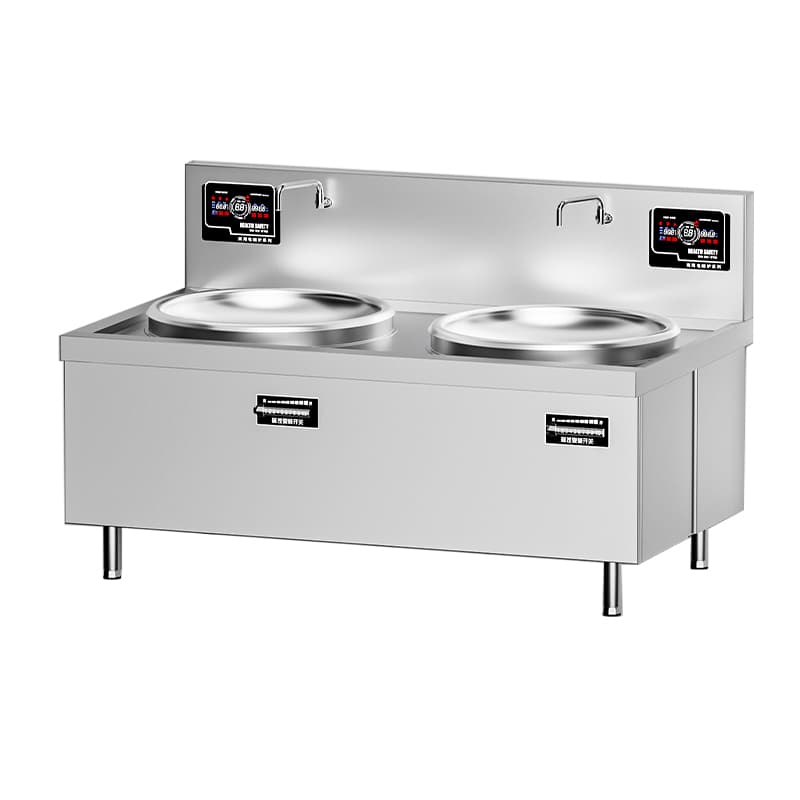
Single-position equipment can be easier to place, move or separate into different stations. It may also reduce the effect of one service event on a larger shared frame. A double floor-standing range can provide a unified working height and a compact line arrangement. The buyer should compare labor, menu sequence, available width, maintenance access and circuit planning rather than choosing from footprint alone.
- Number of operators at the station
- Meals or batches required during the peak period
- Whether both positions must run at the same time
- Available line width and movement space
- Independent control and service-access expectations
- Electrical capacity for simultaneous operation
04
Select countertop or floor-standing construction by installation need
Countertop and floor-standing are installation formats inside the commercial induction wok category. A countertop unit may suit a flexible line or an existing bench, but the support surface must be stable, strong enough for the loaded vessel and appropriate for the equipment’s ventilation and cleaning requirements. The finished working height should be checked with the intended wok and operator movement.
A floor-standing range creates a dedicated station and can integrate the cooker into a stainless-steel body. The buyer should review leveling, access panels, control height, edge treatment, cleaning zones and the route for power connection. Product images cannot confirm internal service space or airflow. Ask for drawings and installation information for the exact model under consideration.
Built-in requirements need a separate conversation. If a project wants the cooking module integrated into a custom counter, the available built-in option, cut-out, enclosure ventilation, structural support and service removal route must be confirmed. Never copy a cut-out from a similar-looking cooker or treat a rendering as an installation drawing.
Station layout questions
Map the cooker against adjacent prep, water, refrigeration, extraction and pass areas. Leave space for the cook to handle a loaded wok without colliding with controls or neighboring equipment. Confirm how spills are contained and how the floor, bench and rear area are cleaned. These details can affect the preferred construction more than a minor difference in cabinet appearance.
05
Evaluate controls through the operator’s real sequence
A control panel should be evaluated for the actual kitchen environment. Consider whether the operator wears gloves, works with wet or greasy hands, needs frequent power changes, and can see the display from the working position. Ask how the setting is changed, how the unit communicates alarms and whether a restart is required after cookware is lifted or an abnormal condition occurs.
Control labels, menus and display symbols should match the destination and training plan. If a language or private-label change is requested, it must be reviewed as an explicit OEM requirement rather than assumed. The buyer should also confirm which settings are user controls and which are service parameters. Unauthorized parameter changes can create support and consistency problems across a restaurant group.
- Control visibility from the normal operating position
- Response when the wok is moved or removed
- Alarm and fault indication described in the manual
- Power recovery behavior after an interruption
- Cleaning around buttons, knobs or touch controls
- Language, label and private-brand requirements
Wok compatibility check
Share the wok, cooking task and station layout before requesting a model.
LINGSHI can use your cookware, position count, installation direction and site power information to discuss the available commercial induction wok range configuration.Send your wok requirements06
Complete electrical and site preparation at model level
Commercial induction wok equipment can represent a significant electrical load, especially when multiple positions operate together. The project should give the supplier the available voltage, phase and frequency, then obtain the rated data and installation instructions for the proposed model. A qualified local professional should confirm circuit capacity, connection, grounding, isolation and protective devices under the applicable rules.
Do not select cable size, breaker rating or phase arrangement from a general buying guide. These decisions depend on the nameplate, installation manual, local code, cable route, ambient conditions and other design factors. The safe SEO answer is also the practical procurement answer: get model-specific documents and have the installation reviewed locally before ordering.
Airflow deserves the same attention. Ask where cooling air enters and exits, what clearances are required and how grease or steam exposure is managed. A blocked intake can affect operation even when the electrical supply is correct. The installation plan should provide cleaning access without encouraging staff to push the equipment against a wall or cover openings.
- Exact installation position and available utility data
- Rated voltage, phase, frequency and input information for the selected model
- Connection and protective requirements from the manufacturer
- Ventilation openings and required clearances
- Local extraction, fire and kitchen compliance review
- Service access without removing unrelated equipment
07
Run a sample test that represents the wok station
A credible sample test uses the intended wok and a repeatable operating cycle. A demonstration with an unknown pan and no load record is useful for showing that the unit powers on, but it does not validate the buyer’s application. Agree on the vessel, ingredients or water load, control sequence, duration and observations before the test.
The evaluation should include more than heating speed. Observe vessel stability, control response, behavior when the wok is lifted, fan operation, alarm handling, surface temperature warnings, cleaning access and the operator’s ability to work safely. If exact performance measurements are required, define the method and instruments with a competent technical party. Keep the conclusion limited to the tested model and conditions.
Factory testing evidence to request
Ask which functional and electrical checks are applied to the selected configuration, how records are linked to a batch or unit, and which reports can accompany the order. Possible checkpoints may include assembly inspection, control operation, cooling fan checks, alarm simulation, run testing and electrical safety checks. The supplier must confirm the actual method; a buyer should not assume a test exists because it is common in the industry.
- Test name and purpose
- Equipment or method used
- Test condition and acceptance criterion
- Sampling level or unit coverage
- Record format and traceability reference
08
Build the shipment inspection around the approved sample
Pre-shipment inspection should compare production units with the approved specification and reference sample. For a wok range, confirm model, technology, cooking-position count, surface format, controls, stainless-steel construction, included wok or accessories, nameplate data and packaging. Functional sampling should follow a safe agreed procedure and should not replace competent electrical safety testing.
Packaging inspection is especially important for glass-ceramic surfaces, projecting controls, cabinet edges and loose cookware. Review internal restraint, surface protection, carton strength, handling marks and the way accessories are prevented from damaging the equipment. If the order will be containerized, agree how cartons or crates are identified and how loading condition will be documented.
A third-party inspector needs objective criteria. Provide drawings, photos of the approved sample, label files, accessory lists, defect categories and the inspection plan before production is complete. Vague instructions such as “check quality” produce vague reports. The clearer the purchase specification, the more useful the shipment inspection becomes.
09
Use a complete commercial wok range RFQ
A strong RFQ lets the supplier propose a configuration without guessing. Begin with the application and wok. Add the desired construction, number of cooking positions, site power and destination. Then state the commercial and quality information needed for the next decision, such as sample availability, drawings, documents, packaging and inspection access.
Keep required items separate from preferences. If a dimension, electrical option or certification is mandatory for the project, identify it as a requirement and request evidence. If it is a preference, allow the supplier to explain the closest available option. This prevents a quotation from appearing compliant simply because the enquiry left important fields ambiguous.
- Menu, cooking process and batch size
- Wok material, curvature, working diameter and loaded weight
- Single or double cooking positions
- Countertop, floor-standing or built-in direction
- Destination, voltage, phase and frequency
- Quantity, sample requirement and expected project schedule
- Drawing, manual, label and document requirements
- Packaging and pre-shipment inspection expectations
Buyer FAQ
Frequently asked questions
Does a commercial induction wok range need a special wok?
Usually the wok must match the induction system and cooking-zone geometry. Confirm the material, curvature and size with the proposed model, and approve the cooker and wok as a combination.
Should I choose a flat or concave induction wok cooker?
Choose from the cookware and cooking technique. A flat surface works with an appropriate flat-base vessel. A concave unit is a dedicated format for a matched curved wok. Test the actual task before deciding.
Is a double induction wok range always more productive?
No. It adds another cooking position, but output also depends on operators, prep, electrical capacity, station layout and whether both positions can work simultaneously during peak service.
Can I specify the wok range by power alone?
No. Power must be reviewed with the wok, cooking task, control behavior, electrical supply, ventilation and construction. Ask for a model-level recommendation rather than choosing one isolated number.
What should be checked during a factory sample test?
Use the intended wok and a defined load. Check stability, response, vessel-removal behavior, controls, alarms, fan operation, cleaning access and the installation documentation for the exact sample.
What information should I send to a wok range manufacturer?
Send the menu, cooking process, wok details, batch size, number of positions, installation format, destination, electrical supply, quantity, document requirements and inspection expectations.
Conclusion
Use evidence to narrow the next decision
A commercial induction wok range is a working system made up of the cooker, wok, operator, station and electrical installation. The buying process should begin with that system, not with a wattage or catalogue photograph. Document the cooking cycle and cookware, then choose the position count and construction around the service layout.
Before a bulk order, validate the proposed model with representative cookware, model-specific installation information and an agreed quality plan. Use the approved sample and specification during shipment inspection. These steps reduce ambiguity and give both buyer and supplier a clear basis for quotation, production and acceptance.
Technical references
Sources and evidence boundaries
These sources support general technical explanations. They do not certify any LINGSHI model or replace model-level documentation, local codes or qualified installation advice.
- U.S. Department of Energy — Induction Cooktop AnalysisBackground reference on induction technology and the range of commercial induction equipment formats.
- U.S. Department of Energy — Making the Switch to Induction Stoves or CooktopsReference for the induction heating mechanism; not a model-level performance claim.
Prepare the shortlist