Countertop induction · Distributor planning
Countertop Induction Cookers: Plan Your First Distributor Order
Give each opening-range SKU a customer task, a documented configuration and a support plan. This guide helps importers and distributors prepare an order their team can explain and check item by item.
Quick answer
The decision in brief
- Start with the professional customers and tasks you can reach and support. Use enquiry and sample evidence to decide the opening range.
- Record the exact model, heating method, surface, electrical variant, cookware and documents for every SKU before confirming the quotation.
- Agree quantity, packing and support responsibilities against that record. No universal 3.5/5/8 kW stock ratio, minimum order or local service coverage is established by this guide.
Turn an initial distributor shortlist into a traceable first-order specification and a plan for serving local professional buyers.
Import-capable distributors, importers and kitchen equipment dealers serving India and Southeast Asia.
01
Define the customers your first range will serve
List the professional buyers you can reach: equipment dealers, restaurant groups, kitchen contractors or other channel customers. Record the tasks appearing in their enquiries, their cookware and site questions, and the installation or service help they expect from your team.
Use your own enquiries and evaluation feedback to set the initial scope. Where that history is limited, agree an evaluation range before making a larger stock commitment. Product listings or keyword search estimates alone do not determine demand for a new brand or the number of units you should order.
- Customer segment, destination and sales channel.
- Cooking task, vessel, available space and supply information to confirm.
- Demonstration, installation and support responsibilities your channel can actually provide.
02
Use model records to build an evaluation shortlist
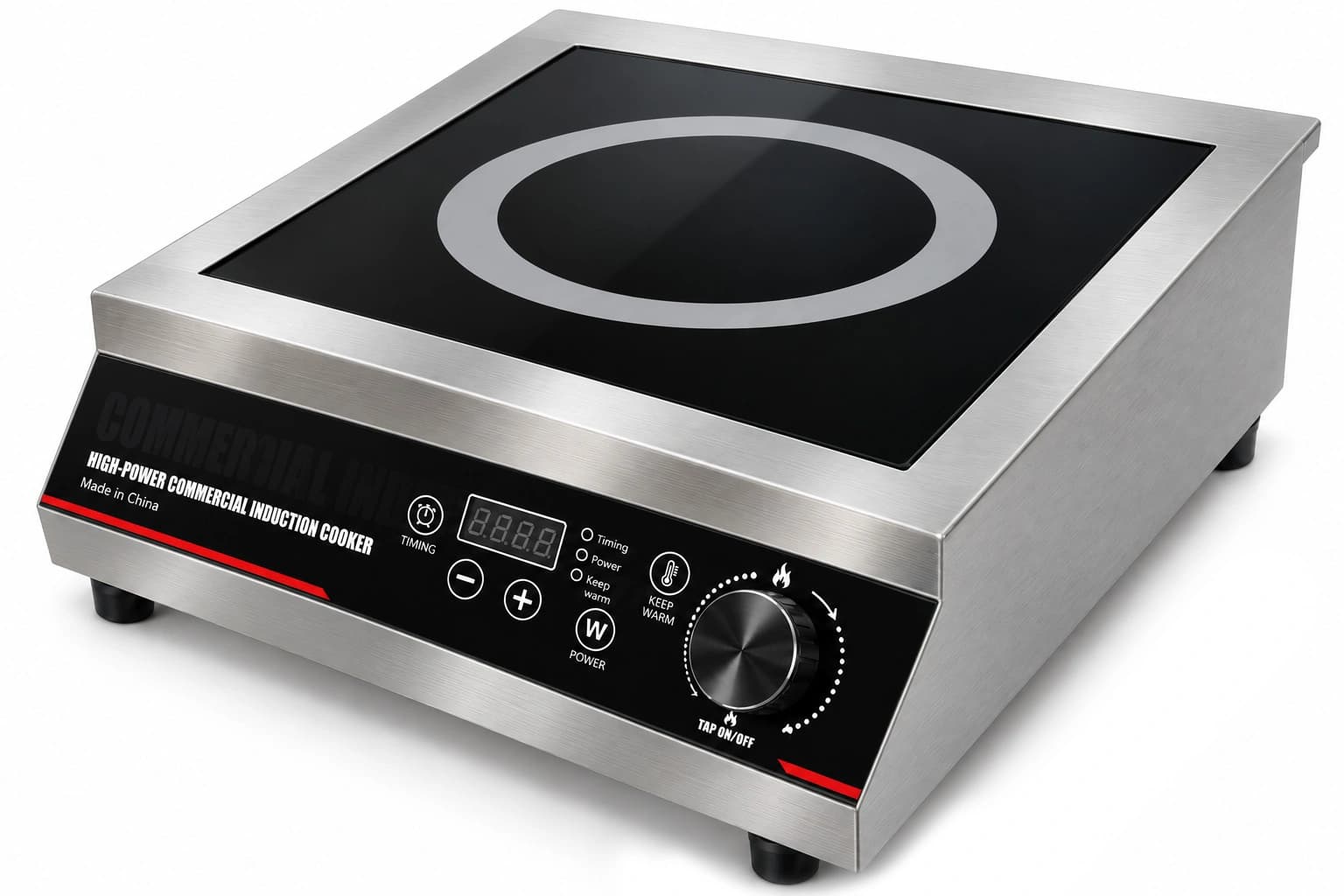
The three references below connect the opening-range discussion to existing LINGSHI records. Each includes flat-top and concave configurations. Open the product page and identify the selected variant before recording it as an order line.
Add other models from the existing countertop family when their documented configuration fits a customer task. Evaluate cookware, body size, controls and site requirements for each candidate. A higher power label does not establish better sales, greater throughput or suitability for a particular dish.
| Product reference | Recorded rated power | Recorded surface options | Question to resolve |
|---|---|---|---|
| DC Series 3.5 kW | 3.5 kW | Flat-top / concave | Which exact configuration and customer task will the sample evaluate? |
| U Series 5 kW | 5.0 kW | Flat-top / concave | Do the documented body, vessel requirements and site conditions fit the enquiry? |
| U Series 8 kW | 8.0 kW | Flat-top / concave | Which electrical variant and operating task need confirmation before ordering? |
03
Create a SKU matrix before the final quotation
Keep product appearance, heating technology, surface geometry and electrical variant in separate fields. This matters when a wider catalogue contains both induction and radiant appliances with similar bodies. The three references above are induction records; another similar-looking item needs its own technology check.
Give every order line a supplier model and your own internal reference. Link the selected variant, sample record and document versions to that line. Missing entries stay visible so an assumption is not copied into the quotation, carton label and customer listing.
| Order field | Information to retain |
|---|---|
| Product identity | Supplier model, selected variant, internal SKU and sample reference |
| Heating and surface | Confirmed heating technology and the selected flat or concave surface |
| Electrical specification | Recorded rated power and the exact supply and connection requirements to confirm |
| Cookware | Approved vessel reference; included, optional or buyer-supplied status |
| Physical details | Body dimensions, placement and documented installation clearances |
| Controls and accessories | Ordered control version, accessories and any requested changes awaiting confirmation |
| Commercial scope | Quantity, sample terms, packing, price and the agreed delivery basis |
| Documents and support | Instruction and label versions, destination review, contacts and written support responsibilities |
04
Approve the sample against the intended customer task
Select a task that represents the intended application. Record the model and variant, cookware, reviewed supply arrangement, starting conditions, operating sequence and actual result. Ask the staff who will demonstrate and support the item to review its controls, instructions and handling requirements.
Retain the observations and unresolved items with the SKU. A cooking demonstration does not establish an untested protection function, waterproof rating, long-term reliability or compliance status. Confirm which production configuration the sample represents.
When a relevant specification changes after approval, identify the change and agree the review or retest needed before the order proceeds. The approved sample and the ordered product should remain traceable to the same agreed configuration.
Existing model references
Open the countertop configurations for your shortlist
Keep the selected surface and variant with the SKU record before discussing quantities.View countertop induction models05
Review destination documents, packing and the customer listing
Give the exact product identity and intended use to the parties responsible for importing and local sale. Record which documents, labels, languages and installation information require confirmation for that item and destination. Check a document's identity, issuer, model coverage and current applicability before using it in a sales listing.
For customs classification, WCO directs product enquiries to the relevant customs administration and explains that final classification follows the national tariff schedule. Keep that review with the importer or responsible adviser. This guide assigns no HS code, duty rate or certification requirement to these models.
Check carton labels, accessories and instruction versions against the SKU matrix. Agree the packing scope for the actual transport and handling route. A packing-test request needs a method and record; a carton photograph does not establish that a test passed.
Build the customer listing from the confirmed order line: heating method, surface, rated power, approved supply variant, dimensions, cookware requirements and what is supplied. Use authorized product images. Confirm any stock, delivery, performance or certification statement before advertising it.
06
Agree who handles demonstrations, installation and support
Identify who receives a customer question, collects the model and purchase reference, and decides the next support step. Ask which manuals, parts information and service communication the supplier can provide for the selected range, then record the agreed scope.
A service record can retain the SKU, purchase reference, reported symptom, useful photographs and the action authorized by the responsible support team. Keep electrical opening, wiring changes and repair work with appropriately qualified people and the model's instructions.
Confirm installation responsibilities, training materials, required languages and how a dealer escalates unresolved issues. Order size or the number of models purchased does not, by itself, establish local service coverage, spare-parts stock or a warranty response time.
07
Check the order line by line, then learn from delivery
Before confirming the first order, retain the evidence below and identify anything still pending. Quantities should follow your enquiries, evaluation results and agreed commercial terms. A sample shortlist is not a fixed stock recommendation for every destination.
| Check | Evidence to retain |
|---|---|
| Model and sample | Selected SKU/variant, approved sample record and any change-review decision |
| Destination review | Confirmed document and label scope, responsible reviewer and pending items |
| Packing and contents | Agreed packing, carton identity, accessories and instruction versions |
| Quantity and terms | Order quantities, price, sample arrangements and written delivery basis |
| Customer support | Assigned demonstration, installation and support contacts and agreed scope |
| Final confirmation | Approved order revision, open actions, responsible people and conditions for proceeding |
Use the first delivery to improve the next order
Record enquiries, demonstrations, installation outcomes and support cases against each SKU after delivery. Reorder decisions can then reflect your channel's actual experience. Keep model or document changes visible, and update customer guidance when the questions or evidence change.
08
Send a distributor enquiry that can produce a checkable offer
Start with the existing countertop family and the model references that fit your evaluation scope. The product links open the original details directly. Use the separate manufacturer checklist for wider supplier due diligence; this article organizes the proposed first order.
Send the destination, buyer type, customer tasks, cookware and site information available, model candidates, sample questions and proposed quantities. Ask which specifications, documents, packing and support arrangements can be confirmed. Logo or packaging requests need their own feasibility and commercial review.
- Destination, buyer role, sales channel and intended professional customers.
- Customer tasks, cookware and site requirements still to confirm.
- Proposed model/variant list, evaluation scope and sample questions.
- Quantities, documents, label language and packing requests.
- Demonstration, installation, service and change-confirmation responsibilities.
Buyer FAQ
Frequently asked questions
What is the best quantity for a first distributor order?
Base the proposal on your enquiries, evaluation results, model mix and agreed terms. This guide establishes no universal quantity, MOQ, stock ratio or demand forecast for a new distributor.
Should every first order contain 3.5, 5 and 8 kW models?
Use the three records as references and justify each proposed SKU with a customer task, reviewed conditions and sample evidence. Some enquiries may lead to a narrower evaluation scope or other documented models; no fixed three-model mix is prescribed.
Can one electrical version serve every customer?
Confirm the actual site and the exact ordered variant. Power or voltage in a family record does not establish all phase, frequency, connection, plug or destination requirements.
Can I request my own logo or packaging?
Submit the artwork and intended scope for review. Available methods, product eligibility, quantities, sample approval and terms need confirmation before the request becomes an order commitment.
Does ordering several models guarantee local service support?
Support depends on the written arrangement and the actual capability of the parties involved. Agree who handles installation, customer questions, escalation and any parts arrangement before advertising coverage.
Conclusion
Use evidence to narrow the next decision
A useful first order connects each SKU to a customer task, a sample record, the required documents and clear support responsibilities. Use delivery and customer feedback to refine the range before making the next stock decision.
Technical references
Sources and evidence boundaries
The linked LINGSHI product pages supply the model references. WCO guidance explains where classification enquiries should be directed; it does not assign a code or approve any model. The order tables are proposed records, without actual sales figures, test passes or agreed commercial terms.
- LINGSHI DC Series 3.5 kW product recordRecorded power, surface options and catalogue image; not a stock or sales recommendation.
- LINGSHI U Series 5 kW product recordModel reference. Ordered configuration, cookware and site fit require confirmation.
- LINGSHI U Series 8 kW product recordModel reference. A family supply entry is not proof that every variant suits every site.
- WCO: Harmonized System questionsGeneral classification-enquiry guidance only; no assigned product code, duty rate or destination approval.
Prepare your first-order brief